Posts

Showing posts with the label culture

Food (= chillies) in Bhutan

Image
"In Bhutan, chilli is not a spice. It is a vegetable." These were some of the wise words I was told during the flash introduction to culture, security and practical issues in Bhutan by the UN security officer during my first week. Since then, I have been asked the question "how are you coping with the food here?" in a worried tone, as not everyone is as fond of chillies in every single dish as the Bhutanese are. Selection of Bhutanese dishes at the Folk Heritage Museum restaurant. Chilli sauce ( ezay ) in the front, ema datshi (chillies and cheese) third bowl from the front. Luckily, I was a chilli lover even before coming here, so the experience has not been as extreme as it could be. An average Bhutanese household can use one large sack of chillies (2 kg or so) in one week. It is hard to think of a proper Bhutanese meal without them - and yet chillies are a recent import, perhaps only 100-200 years old. Nowadays Bhutanese staple food usually consists of r...

Festival sideshows

Image
Christmas, the most commercial religious holiday of all is approaching. One might think that the materialistic, carnevalistic celebration of religious holidays would not have reached Bhutan yet – wrong. The two tsechu s, religious festivals I have testified in Thimphu, the capital and in Bumthang, Central Bhutan have had a vast selection of attractions outside the official programme of sacred dances ( cham ): gambling, drinking, dancing girls...you know, the usual things you would associate with a Buddhist festival!    But first: what is a tsechu ? Bhutanese tsechu s are important social and religious gatherings which last 2-5 days and take place in the courtyards of dzongs (administrative and religious centres of the district) or lhakhangs (temples or monasteries) .  The main programme consists of sacred dances which have different significances, commemorating the events in the life of Guru Padmasambhava who brought Buddhism to Bhutan in the 8 th century ...

Bhutan and Finland, part 1: Alcohol

Image
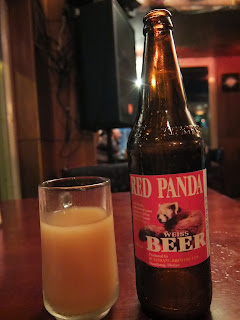
Bhutanese people often ask how do I like Bhutan, adding that "it must be very different from your country".  Actually, in many ways, it isn't.  Just to name a few common things between Finland and Bhutan:  Forest coverage in Finland: 78 %, in Bhutan: 72 % People are modest and don't like bragging about themselves Showing emotions is not common, and talking about them is even less common And finally, alcohol consumption is high (highest in South Asia), and the people who drink, drink a lot Drinkers both in Bhutan and Finland tend to consume mostly beer and strong liquors. I have had the chance to taste a few different kinds of local alcohol brew called ara , among the most memorable being heated ara with pieces of egg in it: dinner and drink together, very convenient! Local Red Panda weissbier. Only local beer brands are allowed to be sold in most restaurants to boost domestic brewery industry.   The attitude towards drunk-driving is still...

Shooting arrows

Image
"The Bhutanese love archery. They also love drinking. They tend to combine their two passions, and this is worrying." Before coming to Bhutan, I read a pile of books trying to grasp this country, most of them written by Westerners. Out of these travel/autobiography accounts Eric Weiner's " The Geography of Bliss - One Grump's Search for the Happiest Places in the World", described by the author as "a philosophical humorous travel memoir" was one of my favourites. His quote above is not that far from reality, as even deadly archery accidents (not necessarily only due to alcohol) have taken place in Bhutan. One of the main news stories last week was a young man who was hit by an arrow , piercing his shoulder 11 cm deep from behind. Apparently his village was 8 days (!) of walking distance from the nearest hospital. Bhutan has no ambulance helicopters (yet, that is one of the new leading party's promises), so the main news of the foll...

Seven wonders of Dakar

Image
Today once again I am about to leave the cute little town of Mboro, my more or less permanent place of residence in Senegal and replace it with Dakar, the less cute and crowded capital of Senegal - this time to welcome my boyfriend for a visit to the Western tip of Africa. Visiting Dakar from time to time for work and leisure is a great pleasure – and almost like a visit to a wonderland. If selecting carefully places to go to, one could live in Dakar pretty much like in a European city. At least if one has enough money, as I tend to use in one day in Dakar the amount of money I would use in a month in Mboro. So here we go: seven wonders of Dakar that I personally have enjoyed. 1. Modern art The month of May was especially good culture-wise in Senegal. In the end of May I travelled for the annual jazz festival in Saint-Louis, northern Senegal, where I also visited some art galleries with exhibitions related to the Dakar Biennale, month-long modern art happening in Dakar and in a minor ...

Smells, odours, fragrances and scents

Image
”It smells like Africa.” I remember having this lovely cliché in my mind when descending from the plane at the airport of Dakar 7 weeks ago. A similar general mixed smell of earth, wind and fire (!) might exist in other continents on the same climate zone, but having only been to Europe, Africa and North America so far, for me it is the smell of Africa, both East and West.  I take it as a sign of acculturation to be able to distinguish smells related to Senegalese food: I can tell now whether the restaurant at work place is preparing the most common dish, fish with rice (tiepboudjen) or maybe peanut sauce with rice (mafe). While walking on the street, I recognize the smell of the little meat/fish pies, fried in oil and stuffed with spicy onion-tomato sauce. The smell of the Senegalese tea (ataaya) is also easily distinguishable with a strong smell of - well, less surprisingly - tea, with several (dozen) spoonfuls of sugar and fresh leaves of mint.  Unfortunately, often the sme...